
Pedro Pascal conquers the trolley problem
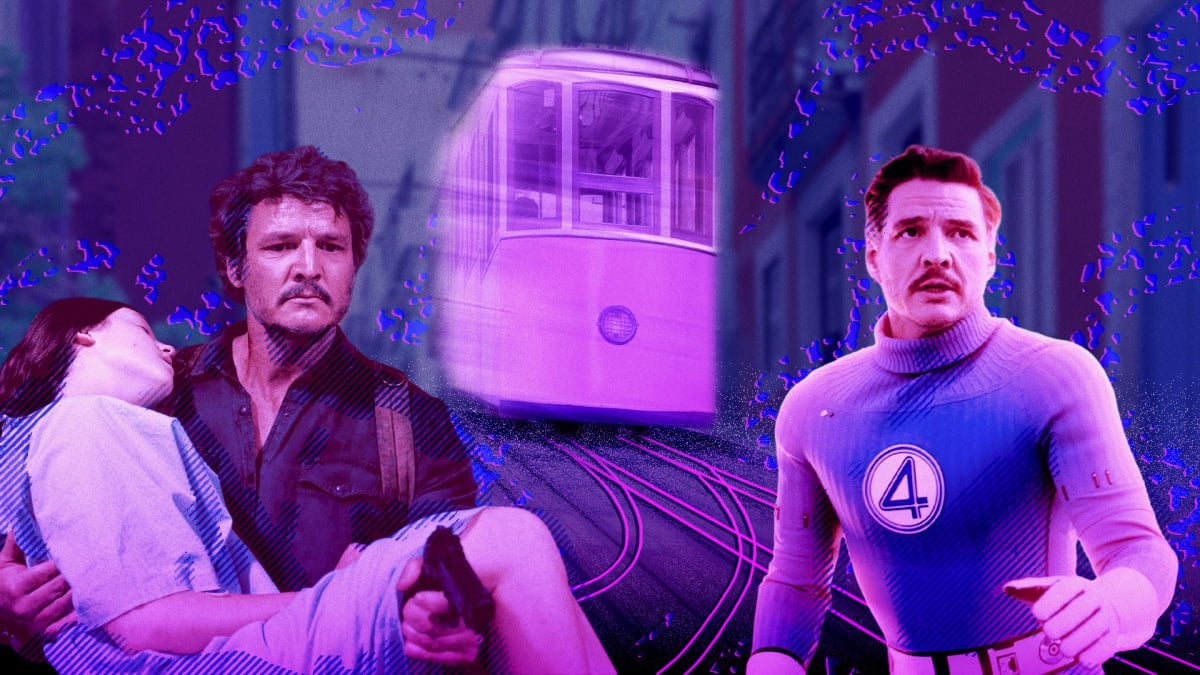
From The Last of Us to The Mandalorian, Pedro Pascal has become Hollywood’s go-to actor for playing father figures. Need a dad? Pascal’s your guy!
Yet that privilege comes with a terrible burden, because everyone keeps asking Pascal’s characters to make a nightmarish choice: Save your child, or save the world?
The first instance of a Pascal character facing this dilemma comes in the Season 1 finale of The Last of Us. Joel (Pascal) learns that the Fireflies can cure the Cordyceps fungus (yay!), but only if they kill Ellie (Bella Ramsey) to get access to her brain (boo!).
Then, in The Fantastic Four: First Steps, Reed Richards/Mister Fantastic (Pascal) discovers that Galactus (Ralph Ineson) will spare Earth from total annihilation (yay!) on the condition that he and Sue Storm/the Invisible Woman (Vanessa Kirby) give up their newborn son Franklin (boo!).
Dilemmas and Decision-making
Each dilemma puts a twist on the trolley problem, an ethical thought experiment first posited by philosopher Philippa Foot. In the experiment, a runaway trolley is barreling towards five people, certain to kill them. If you pull a lever, you’ll divert the trolley to a different track, killing one person instead. Do you do nothing and let five people die, or take action and doom one person yourself?
The Last of Us and The Fantastic Four: First Steps dial the stakes of the trolley problem way, way up, both in terms of scale and emotional involvement.
Character Responses
So, how do each of Pascal’s characters face down these eerily similar conundrums? Extremely differently, to say the least, but totally in keeping with the theme and tone of their respective projects.
Take a look at The Last of Us. Between the game and the show, there’s already been years’ worth of discourse over Joel’s choice to save Ellie and massacre the Fireflies. Should we condemn him for robbing the world of a cure, even if he saved someone he loved? Would a cure have been possible given the minimal resources the Fireflies have? And what would Ellie have wanted?
These are all external factors that could have influenced Joel’s decision, but the truth of the matter is, it all boils down to him doing what he did throughout Season 1: fight to protect the person he cares most about in the world.
Analysis of ‘The Fantastic Four: First Steps’ Mid-Credits Scene
If the track teleportation fails, there’s always another option for solving the Franklin versus Earth trolley problem: Teleport the Galactus-trolley itself by luring it to a teleporter in Times Square! That’s the kind of lateral thinking Foot and Thomson surely didn’t anticipate when creating and naming the problem.
The Heroic Approach of the Fantastic Four
Reed and the rest of the Fantastic Four’s approach of protecting everyone on Earth from Galactus — including would-be sacrificial lamb Franklin — is in keeping with The Fantastic Four: First Steps‘ overall feeling of optimistic heroism. Here, everyone deserves to be saved. It’s not a matter of choosing which track the trolley should barrel down; it’s a matter of moving the tracks entirely so no one gets hurt.
Comparison with ‘The Last of Us’
As a lone wolf with no superpowers stuck in a post-apocalyptic world, The Last of Us‘ Joel simply doesn’t have Reed’s trolley-problem-altering resources. He still does the best he can, but no offense to him, I know which Pascal character I’d call to help me out if I’m ever faced with a trolley problem of my own. Reed had better keep those teleporter gates handy.