
Intel’s 20-year-old AI Ethics Prodigy Discusses the Future of Artificial Intelligence
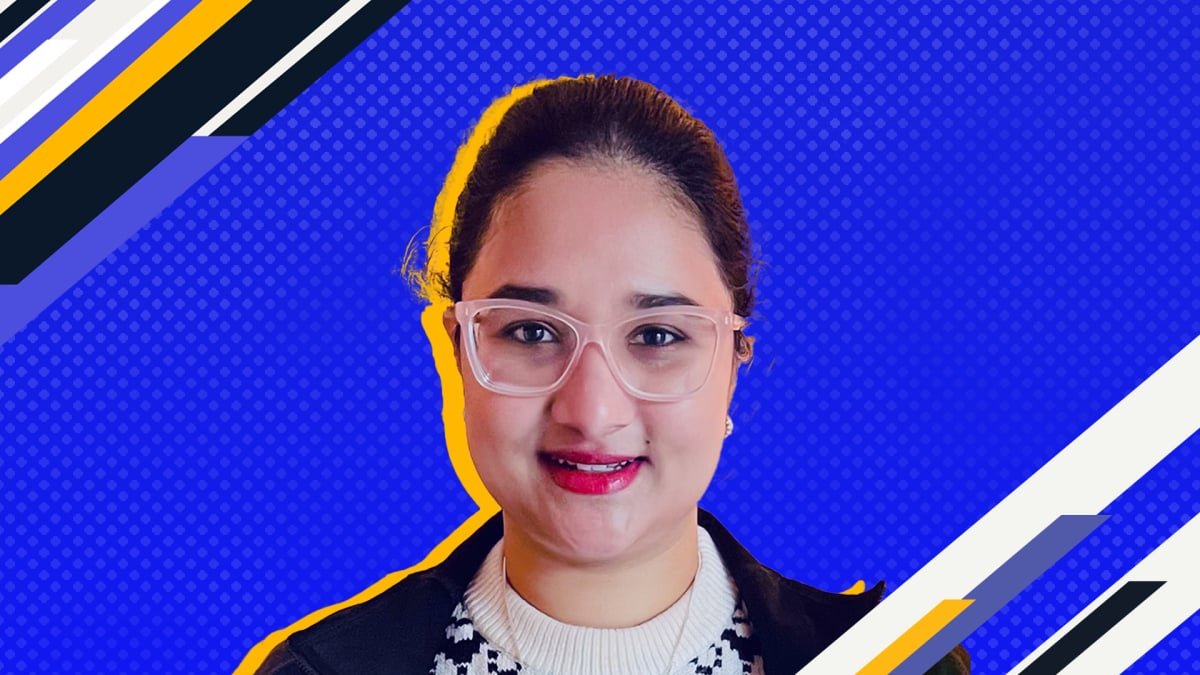
Ria Cheruvu has been ahead of the curve for most of her life. After graduating from her Arizona high school at just 11, the student deemed prodigy became one of the youngest people to ever graduate from Harvard. Her collegiate record is a marvel to many. Following a period studying neurobiology and during the completion of her first computer science degree, Cheruvu was hired for Intel’s ethics team — preceding the AI boom that would soon hit mass markets, and years before the phrase became a household utterance. At the time of her hiring, Cheruvu was just 14 years old. In the years since joining the tech giant and graduating from the Ivy League, she’s become a go-to voice on responsible AI development, bolstering her resume with multiple AI patents, a Master’s Degree in data science from her alma mater after a neuroscience internship at Yale, and multiple teaching credits for digital courses on AI ethics. She’s working on a PhD, as well, because… why not? Today, as one of Intel’s AI architects and “evangelists” — yes, that’s the real word — the 20-year-old is on the forefront of one of the world’s hottest topics: How do we move forward with this technology, and how can it be done in a way that ensures real people remain at its core? Her presence is a rare thing in an industry now steamrolled by capital investors, commercial interests, and self-proclaimed tech “disruptors.” But her age is more of a benefit than a hindrance, as the future of AI will soon be placed in the hands of the next generation of technologists and users — her peers — and many of them are already embracing the complex integration of generative AI in their daily lives. Cheruvu spoke to Mashable about her now-established career in the realm of “AI for Good,” one of the few young voices with a seat at the table as the world reckons with accelerating change.
### Cheruvu’s Journey Into AI and Intel
After I graduated with my Bachelor’s in computer science, I was looking for the next step. It was a turning point: Do I go into neuroscience, or do I get into something that’s pure computer and data science related? I had a brief interest in AI. Both of my parents are software engineers by training and have their Masters in computer applications and technology. At the time, my dad was working at Intel Corporation. I had actually been on a number of field trips in high school to our local campus. I applied, and I interviewed with three different teams in different areas. One was pure math and AI, the other was a little bit on the neuroscience side, and then the last was deep learning and hardware. Eventually, I picked that third team and got accepted. It evolved from there into a six year journey of different roles at Intel.
### The Importance of Ethical AI Development
I’ve been looking at ethical AI for about two to three years now, professionally and personally. From the technical angle, there’s a lot of things to be done: technical tooling, analysis, metrics, quality assurance, all of that fun stuff. On a societal aspect, an incredible amount of work needs to be done toward privacy, consent, bias, and algorithmic discrimination. It’s been a whirlwind, learning about all of these topics and then trying to understand which are practical versus which just seem to be talked about a lot, and doing honest reevaluations.
She believes there is an increasing need for younger voices and opportunities for younger generations to be able to step up and to start contributing to these technologies. Cheruvu’s reflections on AI and humanity, influenced by her mother’s background in metaphysics and philosophy, are shaping her approach to the ethical development of AI. Cheruvu emphasizes the importance of a “human centered” framework in the future of AI, focusing on empowering users and ensuring data control and consent are prioritized.
When we see a lot of these technologies, like robots and self-driving vehicles, starting to pop up, how are they empowering user experiences? How are we building trust into these relationships?
Leading Researchers in the Field
There’s a couple leading researchers who are the subject matter experts in this field. I’m thinking of Fei Fei Li and Yejin Choi. It’s been really interesting to see how their research and the research coming out of their labs and teams has been connected to bigger advancements or leaps in AI. I have been using that research as a marker to demystify what’s coming up next in the AI industry.
The Role of an “Evangelist” in AI Communication
Your title is “evangelist,” which is an interesting term to use for scientific development, but essentially you’re a public communicator. How do you navigate that role amid the onslaught of AI coverage?
There’s a lot of pressure, there’s a lot of hype, placed on certain topics. It takes a pretty strong will and determination to push through that and say what is important for me, for my community, for the industry, right now. To focus on what is really driving the practical impact I want to communicate and share with folks, things I can inspire them to be optimistic about. I want to be honest about risks and challenges, too. Instead of buttering up the truth, be straightforward about it. As an evangelist, someone who’s passionate about public speaking just as much as coding, what does that balance look like?
Envisioning Peers’ Involvement in AI Conversations
How do you envision your peers getting involved in these conversations?
I think that there is an increasing need for younger voices and opportunities for younger generations to be able to step up and to start contributing to these technologies. Through their usage of it, the technologies are getting mastered pretty quickly.
And it’s important to bring a fresh perspective to AI design. Not only consuming the technology, but contributing to its development, being able to shape it in ways that are different. Rather than seeing it as a kind of “disruptor” or a “bubble” that needs to be explored and pushed to the limit, we can bring it back to the applications where it can be most useful.
There’s a lot of opportunities to contribute. Not a lot of them are as recognized as other applications, in terms of priority, coverage in the media, or public interest, but they definitely lead to a much more meaningful impact. There’s always bigger projects, and bigger themes — like large language models — but the smaller applications really make a difference, too.
AI as a Global Inheritance for Future Generations
Sorry to use a cliché, but it feels like AI is yet another “global inheritance” we’ll be tossing down to younger generations, much like we’ve done with our current climate crisis.
I was reading that quote recently about being able to leave the world behind a little bit better than how you found it initially. In a generational context, we need to continue to have conversations about this, especially with the AI algorithms that are close to us, whether it’s social media or apps that are writing content for you. You’re getting exposed to them on a day to day basis.
The Responsibility of Current Stakeholders and Developers
In my opinion, many people are uncomfortable with the widespread pressure to use AI in our daily lives, when we don’t fully understand what’s at stake. They want things to slow down.
I feel like folks who are working on AI and machine learning know that very well, but, for some reason, it doesn’t proliferate outside of that bubble. Folks who are working in AI know to be very, very cautious when they see a tool. Cautious in the sense of, “I’m not going to adopt it, or I’m not going to use it, unless I think it’s useful.” But when it comes to AI stakeholders externally, I think it’s just a kind of hype. Ironically, that’s not what you see in the inner circle. It just gets pushed on us.
What do current stakeholders or developers owe to the next generation of technologists and users, including yourself?
Human labor disruption is a really big topic, and I’m thinking about talent and folks who want to enter into the AI space. When we talk about AI and these technologies, it’s always: fast, rapid innovation, moving forward. These kinds of words and other terminology keep getting added to a pile that makes it even more intimidating for folks to be able to understand and truly grasp AI. “AI” itself is one of those words. The field started off with “deep learning” and “machine learning,” and it’s been a gradual transition. I’ve seen my job title change from deep learning engineer to AI architect. I’m part of that, too. I think that there might be an opportunity to take AI as a buzzword and break it down — and we can still keep the word, the general feeling around it.
Providers and developers also have a responsibility
However, users can only take on so much responsibility. Providers, developers, and creators of infrastructure also need to be able to shoulder that responsibility. Regulations play a role in protecting the rights of individuals to a certain extent.
Empowering users through education and accessibility
Empowering users with knowledge and accessibility is crucial. There are efforts aimed at inclusive AI, democratizing AI, and AI literacy. Programs such as digital readiness initiatives have been successful in training millions of individuals. More accessibility, tutorials, content, and one-on-one interactions are needed to make AI more approachable and less intimidating.
Topics
– Artificial Intelligence
– Intel
– Social Good