
Every MCU movie villain ranked from least to most menacing

The Marvel Cinematic Universe has evolved significantly since its inception with Tony Stark taking down Obadiah Stane. With over 37 movies released so far, the villains have become more menacing and complex. To celebrate the launch of The Fantastic Four: First Steps, let’s revisit the villains that have shaped the MCU.
52. Malekith (Thor: The Dark World)

Literally, who? — Angie Han, former Deputy Entertainment Editor
51. Samuel Sterns (Captain America: Brave New World)
In The Incredible Hulk, Sterns (Tim Blake Nelson) was an ally to the titular superhero. But in Captain America: Brave New World, it’s revealed that a bit of Bruce Banner’s gamma-radiated blood transformed this once mild-mannered scientist into a supervillain with a scary, big brain and a face only a mother could love. However, Sterns lacks the impact of a cinematic villain, despite his creepy mind control powers and ability to calculate the future. — Kristy Puchko, Entertainment Editor
50. Dormammu (Doctor Strange)
Understanding Dormammu may be complex, but the movie fails to provide a compelling explanation for his character. This lack of depth makes it challenging for audiences to connect with him on a meaningful level. — A.H.
She’s got a cool warhammer (the universal weapon), some powerful jewelry (quantum band), and some tooth bling for extra flair. But this revenge-fueled wannabe savior of the Kree just feels like a retread of lesser cosmic villains who’ve come before, like Malekith and Ronan. Angry, conquering, blah. Uncluttered by egregious prosthetic makeup, Zawe Ashton’s performance isn’t swallowed up like those of her predecessors. Still, there’s not much there there. —K.P.
41. Yon-Rogg (Captain Marvel)
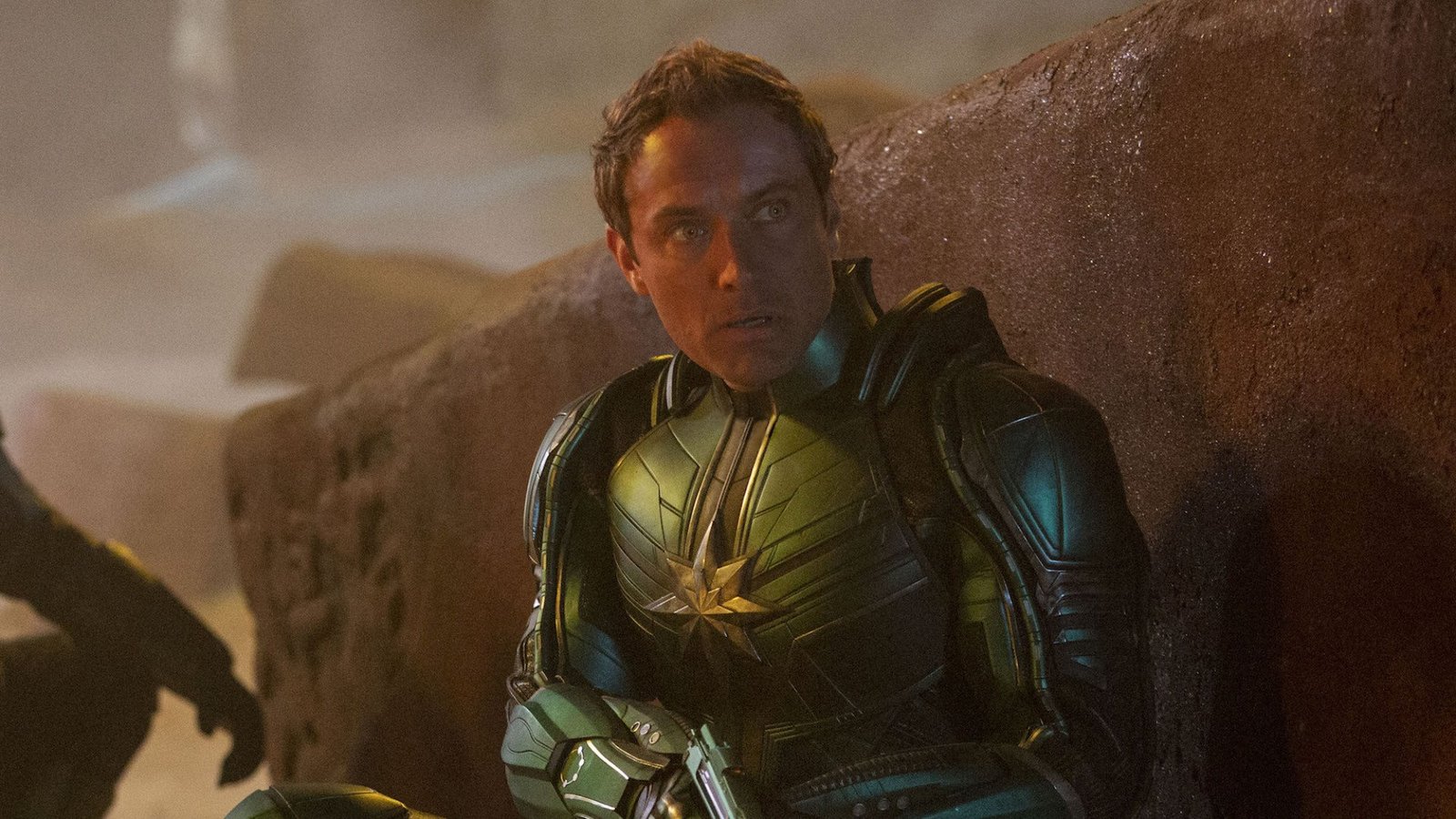
Carol Danvers’ fragile masculine captor isn’t particularly interesting, but not for the first time Marvel gets by on some inspired casting — and in this case, a few well-placed twists. When Carol is about to blast him to Kree-Kingdom-Come during their final showdown, Yon-Rogg encourages her to strike him, to defeat him. It’s so hubristic and patronizing (what’s the Kree word for “mansplain?”) that Carol decides she’d rather just dip. —Proma Khosla, Entertainment Reporter
40. Obadiah Stane (Iron Man)
Obadiah Stane fits so many of the MCU villain tropes we’ve become familiar with: He’s a greedy businessman and a false father figure, and he’s vastly less interesting than the superhero he’s out to get. What makes him first among equals is that he was literally the first, setting the mold for years to come.* —A.H.
The Silver Surfer previously appeared in the non-MCU release Fantastic Four: Rise of the Silver Surfer, where the subtitular antagonist’s real name was Norrin Radd; the character was voiced by Laurence Fishburne and physically performed by Doug Jones. But for the MCU reboot, director Matt Shakman picked the Shalla-Bal incarnation of the Surfer, casting Julia Garner to bring her own unique shine to the part. The result is a sleek spin on the horrifying herald, who’s initially stoic, but then what? “Warm? Kind?” Not exactly. However, there is an intriguing complexity to the Surfer’s predicament, because while she works for planet-muncher Galactus, heralding his approach and picking his massive meals, she does so to save her own planet. Does that make her less of a villain? Not by our math. But it does make her less silver, and more morally gray and therefore compelling. — K.P.
Adam Warlock (Will Poulter) makes a grand entrance in Guardians of the Galaxy Vol. 3, showcasing his golden battle mage skills early on. However, as the movie progresses, he reveals himself to be more of a childlike himbo than a supervillain. By the end of the film, Adam Warlock becomes a new Guardian of the Galaxy, setting the stage for more non-villainous adventures in the future. — Belen Edwards, Entertainment Reporter
Since her debut in Black Widow’s post-credit scene, Valentina Allegra de Fontaine has displayed suave and vaguely scary characteristics. In Thunderbolts, she showcases her master manipulator skills. Despite some setbacks in her plans, Valentina manages to come out on top with a Tony Stark-like move, controlling the narrative in a flashy press conference. Although she lacks superpowers and physical threat, Valentina exudes style and cunning, reminiscent of Samuel Sterns. — K.P.
Upon his arrival as a shadow on the New York City skyline, Void seems a next-level threat. The literal dark side of Bob (aka Sentry), he’s able to blink people out of existence with the raising of his hand, leaving only a stain of jet-black shadow where they stood. Actually, Void is pitching his victims into “shame rooms,” where they’re forced to confront their traumatic pasts and bad choices. The embodiment of depression, he might have been a truly chilling villain in the MCU. But here, he’s basically defeated by a group hug.
Taskmaster (Black Widow)
Taskmaster is Black Widow’s main antagonist for most of the movie, and while they don’t do much beyond showing up and kicking ass, that ass-kicking is some of the best in the MCU. Tasky’s fight scenes are a highlight reel of every Avenger’s coolest moves, and half the fun of watching Black Widow is seeing how Natasha would actually fare if she squared up against Captain America, Bucky (again), Black Panther, and herself. Also, points awarded for having a cool third act reveal. Best wishes to you, Taskmaster.
Alexander Pierce (Captain America: The Winter Soldier)
Like Vulture and Zemo, Alexander Pierce is a relatively understated villain. But he’s got gravitas, because he’s played by Robert Freakin’ Redford, and he raises some genuinely complicated questions about security versus freedom. Well, at least until it’s revealed that he’s been a Hydra agent all along, and therefore unambiguously evil. Oh, well.
Galactus (The Fantastic Four: First Steps)
Look, when it comes to being hangry, Galactus is relatable. Every been so damn tired and hungry you could eat anything? Even a planet? He feels you. But this literally BIG bad takes that hunger to a galaxy-threatening place as he trudges from one all-you-can-munch planet to another. Now, The Fantastic Four: First Steps is a bit frustrating in that it doesn’t really explain why Galactus is driven to eat planets. He doesn’t even seem to enjoy it! The gargantuan cosmic entity is a massive mystery in that regard. But it’s hard to argue with his prowess at spectacle. When he shows up in New York City, the Fantastic Four’s home turf, and dwarfs the Statue of Liberty, he had us quaking in our little white boots. He’s like if a MCU villain were a kaiju. And even if his energy is grumpy dad down to the lumbering footsteps, we’re shook.
Bucky is only a true villain in Winter Soldier, and then just because he’s been brainwashed by Hydra. Maybe that’s a shame, because it turns out he’s pretty good at being bad. He’s all ruthless efficiency and controlled intensity, but his real secret weapon as a supervillain is his tragic backstory. — A.H.
You can now pre-order the ‘Fantastic Four: First Steps’ Galactus LED popcorn bucket, which sold out in seconds
‘The Fantastic Four: First Steps’ end-credits scene, explained
‘The Fantastic Four: First Steps’ review: One of the best MCU films in years
18 best Marvel movies and shows on Disney+ to satisfy your superhero needs
The best VPN for Disney+
Ultron (Avengers: Age of Ultron)
A sort of sentient robot son to Tony Stark, Ultron sounds cooler in theory than he is in execution. But he is voiced by James Spader in mustache-twirling villain mode, and he’s the kind of unapologetic drama queen who insists on having his own throne. That’s not nothing. — A.H.
Hela (Thor: Ragnarok)
Odin’s firstborn and the goddess of death, Hela is a formidable foe for Thor. She breaks Mjolnir! She kills the Warriors Three with her knife-y powers! She’s played by Cate Blanchett! Even though Hela is sidelined for much of Thor: Ragnarok, Blanchett imbues her with delightfully chilling villainy. Also, her outfit is among the best villain looks in the MCU — talk about being dressed to kill. — B.E.
Gorr the God Butcher (Thor: Love and Thunder)
Say what you will about Thor: Love and Thunder, there’s no denying that Christian Bale makes for an amazing villain. Drape that man in a sinister cloak, put the Necrosword in his hand, and give him a tragic backstory, and you’re looking at MCU villain gold. Gorr’s grief-fueled quest to kill all gods in the universe is Love and Thunder‘s most compelling storyline. While the film doesn’t examine it quite as much as I wish it would, it still gives us Gorr being the world’s most terrifying babysitter. Absolutely immaculate villain vibes. — B.E.
Some Marvel villains have been given mystical armies, unnerving prosthetic makeovers, and/or elaborate backstories sparked from petty grievances. Mr. Paradox doesn’t need any of that to be a terrific villain. Sure, at first glance, he just seems like a British suit with a smug attitude. But props to Succession‘s Matthew Macfadyen, who’s made being a power-hungry weasel into an art. Paradox’s plan is one of timeline annihilation, coldly killing off millions of beings because he thinks the timelines are tidier that way. That’s deeply evil and unhinged. But what makes Paradox marvelous is Macfadyen’s delivery. Whether he’s providing a dense exposition dump, dressing down Deadpool for relying on the “Worst Wolverine,” or squawking for help when his master plan goes kabluey, the theatrical energy and snarling self-satisfaction makes for a foe that’s an absolute hoot to hate. — K.P.
Vulture (Spider-Man: Homecoming)
Vulture is a basically normal dude grappling with the fact that he lives in a superpowered world — but unlike our heroes, Adrian Toomes isn’t inspired by example to become one of the good guys. He channels that rage into a successful black-market enterprise selling alien weaponry, but what’s fascinating about Adrian is there’s much more to him than supervillainy. He doesn’t seem to be playing a role in the way that, say, Obadiah Stane was only pretending to be Tony’s friend so he could stab him in the back later. Adrian really is a family man, and he really is an illegal arms dealer. He contains multitudes, and Homecoming doesn’t shy away from it. — A.H.
Namor (Black Panther: Wakanda Forever)
With his winged ankles, green hot pants, and strength to rival the Hulk’s, Black Panther: Wakanda Forever’s Namor (Tenoch Huerta) bursts onto the scene with a tremendous amount of flair. But Namor is so much more than his appearance. A backstory involving his Yucatec-Mayan people fleeing from European colonizers sets the stage for his compelling motivations: wanting to keep his people and their home of Talokan safe. Like Black Panther‘s Killmonger, his reasoning makes sense and initially positions him more as an antihero. Also like Killmonger, his violent methods quickly plunge him into villainy, making for a layered Marvel antagonist who is also a blast to watch. — B.E.
There is a reason why Loki has become a fan-favorite villain in the Marvel Cinematic Universe, appearing in multiple movies and even getting his own TV show. He stands out among MCU supervillains for his fully developed character and sympathetic backstory of familial angst. Tom Hiddleston’s charismatic portrayal of Loki adds an irresistible element to the character, making him hard to resist even when he’s on the wrong side of things.
Wenwu, portrayed by Tony Leung in “Shang-Chi and the Legend of the Ten Rings,” is a standout villain in the MCU. He brings a depth to his character that goes beyond just being a traditional bad guy. The tragedy of Wenwu lies in his mourning for more than just his wife’s loss; he is also mourning the lost opportunity for his own redemption. It’s rare to see a Marvel villain with such complexity, making Wenwu a memorable addition to the franchise.
Eric Killmonger from “Black Panther” is another villain who left a lasting impact on audiences. Michael B. Jordan’s portrayal of Killmonger brought a vengeful and embittered character to life, whose message resonated with many viewers. Killmonger’s background and motivations make him a compelling antagonist, challenging the hero and the audience to consider the injustices faced by marginalized communities around the world.
At the top of the list is Thanos, the ultimate villain in the MCU, known for his role in “Avengers: Infinity War” and “Avengers: Endgame.” Thanos’s impact on the universe was immense, as he erased half of all life with a single snap of his fingers. The build-up to Thanos over the course of the MCU’s first phase created a sense of inevitability leading to his climactic role in the Avengers’ battle against him. Thanos may not be the most exciting villain, but he is undeniably one of the most significant and memorable antagonists in the MCU.
Overall, these villains have left a lasting impression on audiences, each bringing a unique perspective and depth to their roles in the Marvel Cinematic Universe.